
6.9
Barabbas
1961

Where sin abounds... grace abounds more
Luke risks his life to visit Paul in a Roman prison, where the apostle awaits execution under Nero. As Paul reflects on his past and the Christian community faces persecution, Luke resolves to record the story of the early church.
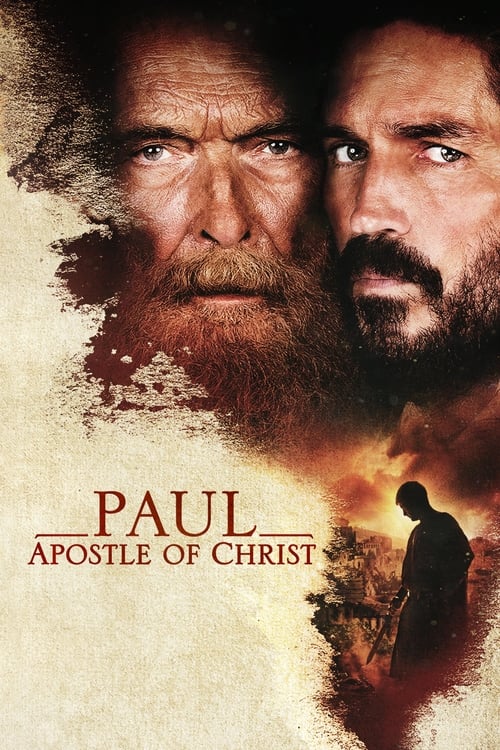
Luke risks his life to visit Paul in a Roman prison, where the apostle awaits execution under Nero. As Paul reflects on his past and the Christian community faces persecution, Luke resolves to record the story of the early church.
 Jim CaviezelLuke
 James FaulknerPaul
 Olivier MartinezMauritius
 Joanne WhalleyPriscilla
 John LynchAquila
 Yorgos KaramihosSaul of Tarsus
 Antonia Campbell-HughesIrenica
 Alessandro SperdutiCassius
 Alexandra VinoOctavia
 Manuel CauchiAnanias
 Noah HuntleyPublius
 Kenneth SpiteriEubulus
 André AgiusStephen
 John-Paul PaceChristian Man 2
 Erica MuscatWoman 2
 Jacob Daniel GrothYoung Man







Availability for your region. Streaming data provided by JustWatch.
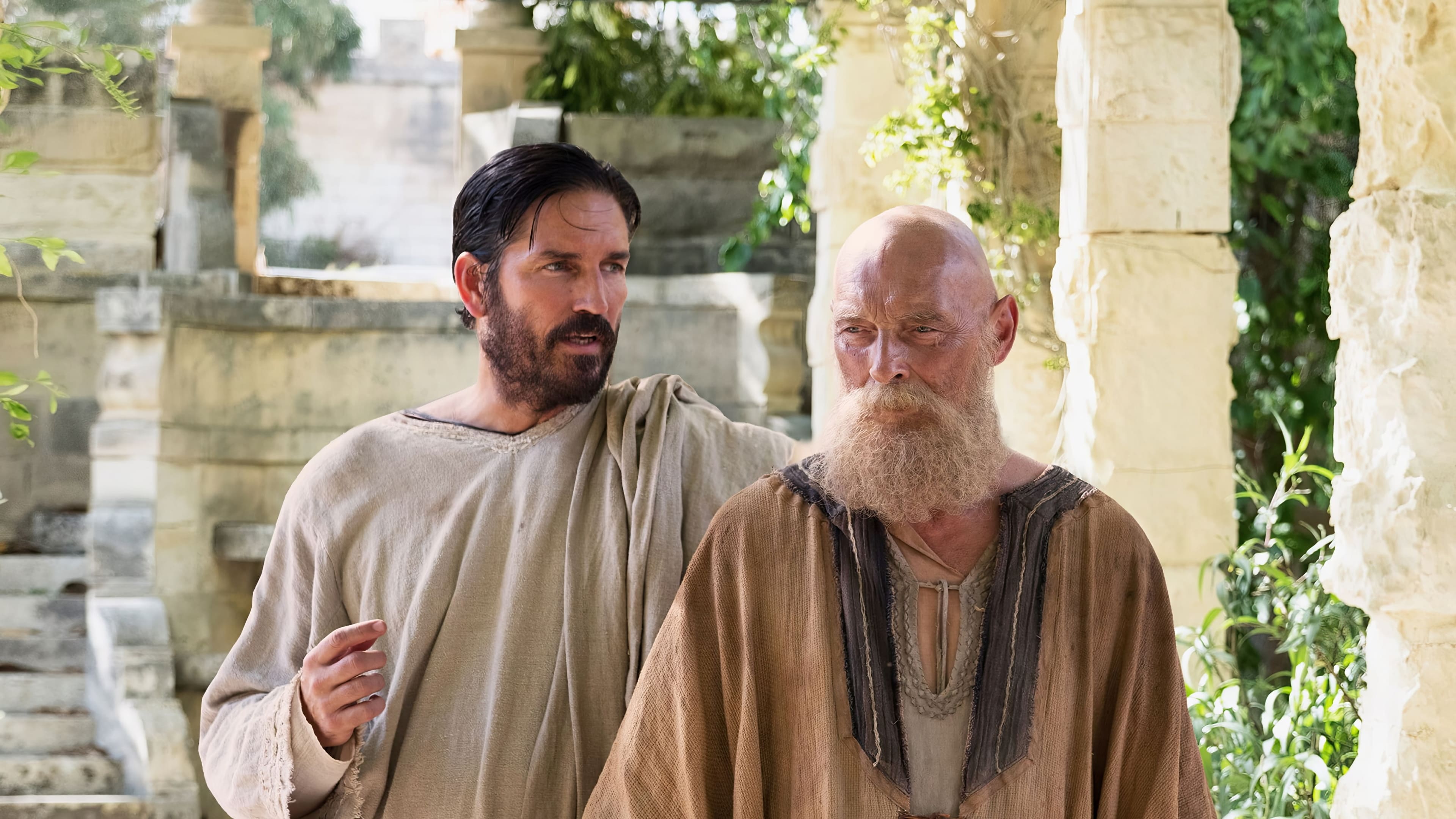
Can you be said to lead by example when the example is spurious? Paul, Apostle of Christ is the early Christianity 'success story' of the conversion of Mauritius Gallas (Olivier Martinez), Commander of the Third Legion of Rome, and Prefect of the Mamertine Prison. Actually, I’m not even sure Mauritius officially converted; he certainly formed a better opinion of Christians after Saint Luke cured his daughter of an indeterminate disease. I guess the filmmakers deserve some credit for not presenting this as a miracle (Luke saves the little girl’s life through his medical knowledge), but it really makes no difference anyway because there was no sick child, no Mauritius Gallas, no Third Legion, no nothing. This is a kind of artistic license that goes well beyond the fact that everyone in Nero’s Rome speaks fluent English (with a French accent, in Martinez’s case). Mauritius’s conversion (if indeed he converted) doesn’t carry as much weight as, say, that of Constantine, and not because the latter was an Emperor and the former a humble prefect; the problem is that Mauritius’s change of heart doesn’t appears to take place, not as a sign of personal growth, but simply because it’s in the script. I mean, if you’re just going to make shit up, why stop at one conversion? Why not go ahead and make it so that the entire Third Legion accepted Jesus Christ into their hearts as their Lord and Savior? Luke is only slightly less fictional than Mauritius, and equally problematic. A "Luke," to whom tradition assigns authorship of the Gospel of Luke and the Acts of the Apostles, was mentioned by Paul in three of his epistles. The movie depicts Luke (Jim Caviezel) visiting Paul (James Faulkner) in the rather well-lit "darkness" of his cell, where the two commit the Acts to paper. Why? According to Paul, "[Luke] believes people should know the certainties of my life." This turns out to be quite an unwittingly ironical statement, considering that a) though the Gospel of Luke and the Acts of the Apostles are attributed to the same author, the true identity of this author remains unknown, and b) there are many contradictions between the Acts and the authentic Pauline letters; thus, in the odd chance Luke did in fact pen these books, it’d be safe to say that he and Paul weren’t as simpatico as this movie would have us believe (the aforementioned irony, by the way, is completely lost on the filmmakers, according to whom "Paul’s life was well documented by Luke").
**An excessively preachy film, aimed at more devout audiences.** It really costs being a historian when we feel like watching a film based on historical facts. We never manage to take off our academic attire and enjoy it, we see errors and inaccuracies where no one sees anything special. And this is tiring. When the film has a biblical theme, things tend to get worse. And what we have here is one of the weakest biblical films I've seen in a long time. Based on solid material extracted from Paul's letters and the book of the Acts of the Apostles, the film seeks to show us a little of Paul's life as a preacher and Christian leader, focusing on the events that followed to the burning of Rome in 64 AD, and showing the rest through episodic flashbacks. The film starts from the correct presumption that the majority of its public is aware of the events and knows who was Paul. And in fact it is difficult to imagine any well-informed Christian who do not recognize the decisive action of this leader: initially, he was a pagan and helped the Jews to persecute the Christians, whom they considered a schismatic sect of their faith. Later, he became one of the defining figures of the early period of the Christianity, and was fundamental in bringing it to other races and peoples, definitively separating Christians from Jews. Tradition tells us that he was killed in Rome shortly after the fire, which Emperor Nero attributed to the fanatical actions of the city's Christians. The film is not bad, but it could have made a better effort to capture Paul's preaching and action among other leaders: there is no mention, for example, of his participation in the first ecumenical council. Nero does not appear, but we see Roman repression in vibrant and exaggerated colors: although Roman chroniclers provided colorful descriptions of the massacres of Christians, it is known that such reports were exaggerated and archeology has never confirmed such ferocity. It was also difficult for me to see how the Mamertine Prison was transformed into a modern penal colony, with strong walls, guards and gates. Anyone who barely knows Rome, and has visited what remains of this place, knows that it was a small prison, used in temporary situations, and that Romans were not in the habit of having large prisons, preferring to send criminals to galleys, quarries and other forced labor: much more practical than feeding lots of prisoners who do nothing all day, the Romans would say. The film also places Luke with Paul in Rome, which doesn't make sense: we know they knew each other and cooperated, but it seems unlikely that Luke would stay calmly in Rome, and in full view of the authorities, after Peter and Paul's arrest. The general atmosphere of the film is somewhat preachy, and resembles a long Easter sermon, which will greatly displease audiences who are less devout or practice their faith. I didn't have any major problems with it, but I also preferred a different approach that was more likely to please a generalist audience. I don't know if the film was financed by a church or something, but that could very well have been the case. James Faulkner is effective in the role of Paul, Olivier Martinez does what he can in a role in which he has to be unpleasant and Jim Caviezel is clumsy and not very interesting in this effort, the second in his career in which he addresses biblical themes.
1961
2016

2018
2019

1983

1960

2024

2021
1954

1947

2023
1996

2009
1916

1997

2008
1964

2016

2017

2018